Partial denture
Replace missing teeth and preserve your smile
 Smile Studio Dental Clinic
20+
years of experience
5.0
200+
6
top specialists
Partial denture: replace your missing teeth
When is a partial denture recommended?
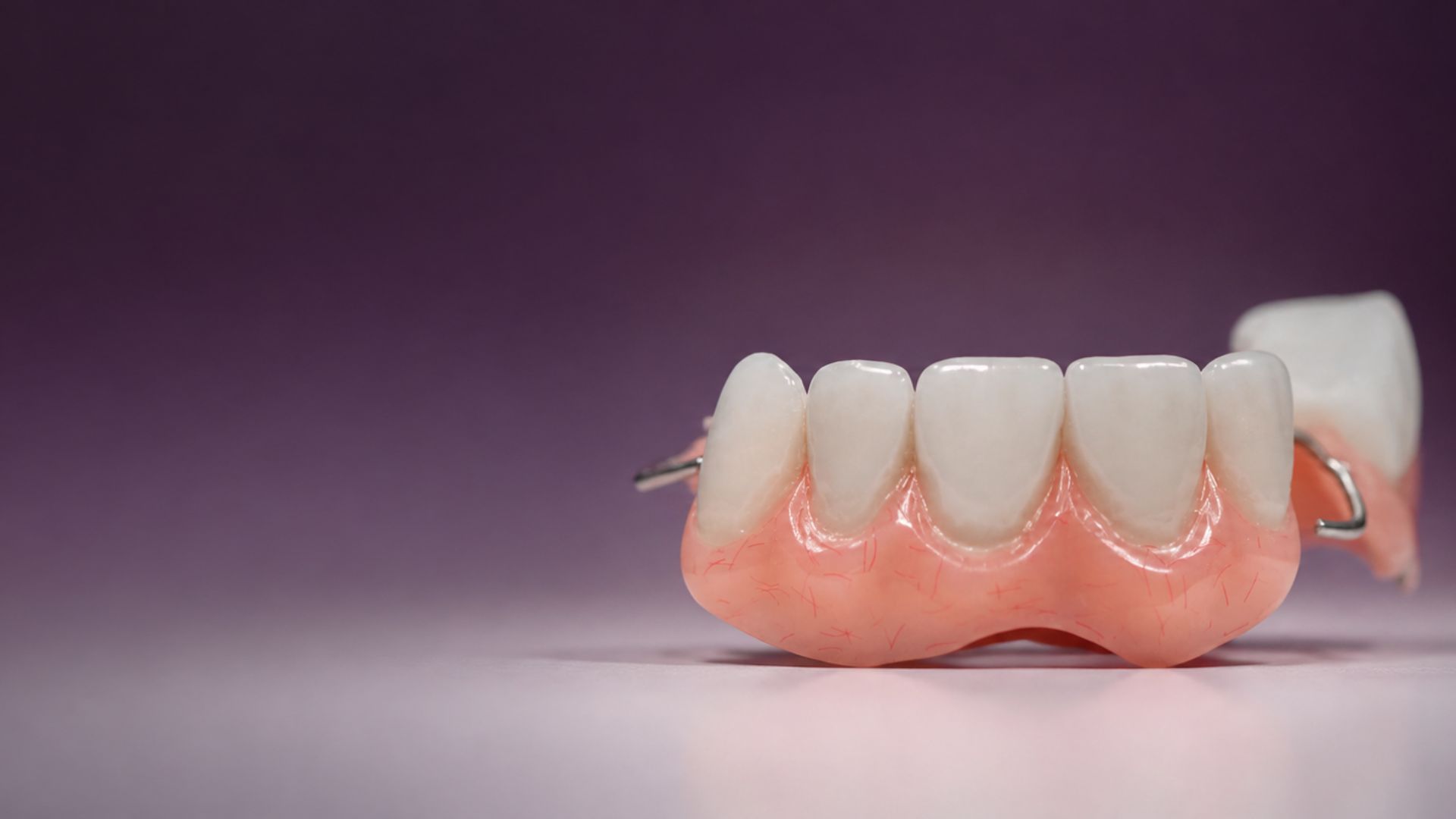
A partial denture is intended for people who are missing several teeth but still have some of their natural teeth. It fills the gaps in the dental arch and restores a more functional, complete smile.
The denture rests on the remaining teeth and surrounding tissues and, depending on the chosen solution, can be secured with clasps or more precise attachments. Because it is removable, the patient can take it out on their own for daily cleaning.
A well-fitted partial denture can make chewing more comfortable and speech clearer, while also supporting the lips and cheeks and improving the appearance of your smile.
Before fabrication, we assess the condition of your remaining teeth, gums and bite. Based on the examination, we plan a denture whose tooth shape, position and shade suit your face and natural smile.
| Feature | Partial denture |
|---|---|
| Who is it for? | People who are missing several teeth but still have some of their natural teeth. |
| Type of restoration | A removable prosthetic restoration that the patient can take out of the mouth on their own. |
| Retention | It can rest on the remaining teeth and surrounding tissues and be secured with clasps or other attachments. |
| Number of teeth replaced | Replaces several missing teeth on one or both sides of the dental arch. |
| Main benefits | Improves chewing, speech, facial support and the appearance of your smile. |
| Adjustment period | At first, the lips, tongue and muscles need time to adapt to the denture. |
| Maintenance | The denture needs to be taken out and cleaned every day, along with regular hygiene of the remaining teeth and gums. |
| Check-ups | Regular check-ups make it possible to monitor the stability, function and condition of the teeth supporting the denture. |
*The final type of partial denture is determined after examining your remaining teeth, gums and bite.
PARTIAL DENTURE: THE FABRICATION PROCESS
How can you replace missing teeth and preserve the function of your smile?

Contact
Contact us by phone or via the contact form to book a consultation. We will be happy to answer your questions and introduce you to the options for replacing missing teeth.

EXAMINATION AND TREATMENT PLAN
We examine your remaining teeth, gums and bite and, if needed, analyse X-rays. Based on the findings, we recommend the type of partial denture that best suits your condition and needs.
PREPARATION AND IMPRESSIONS
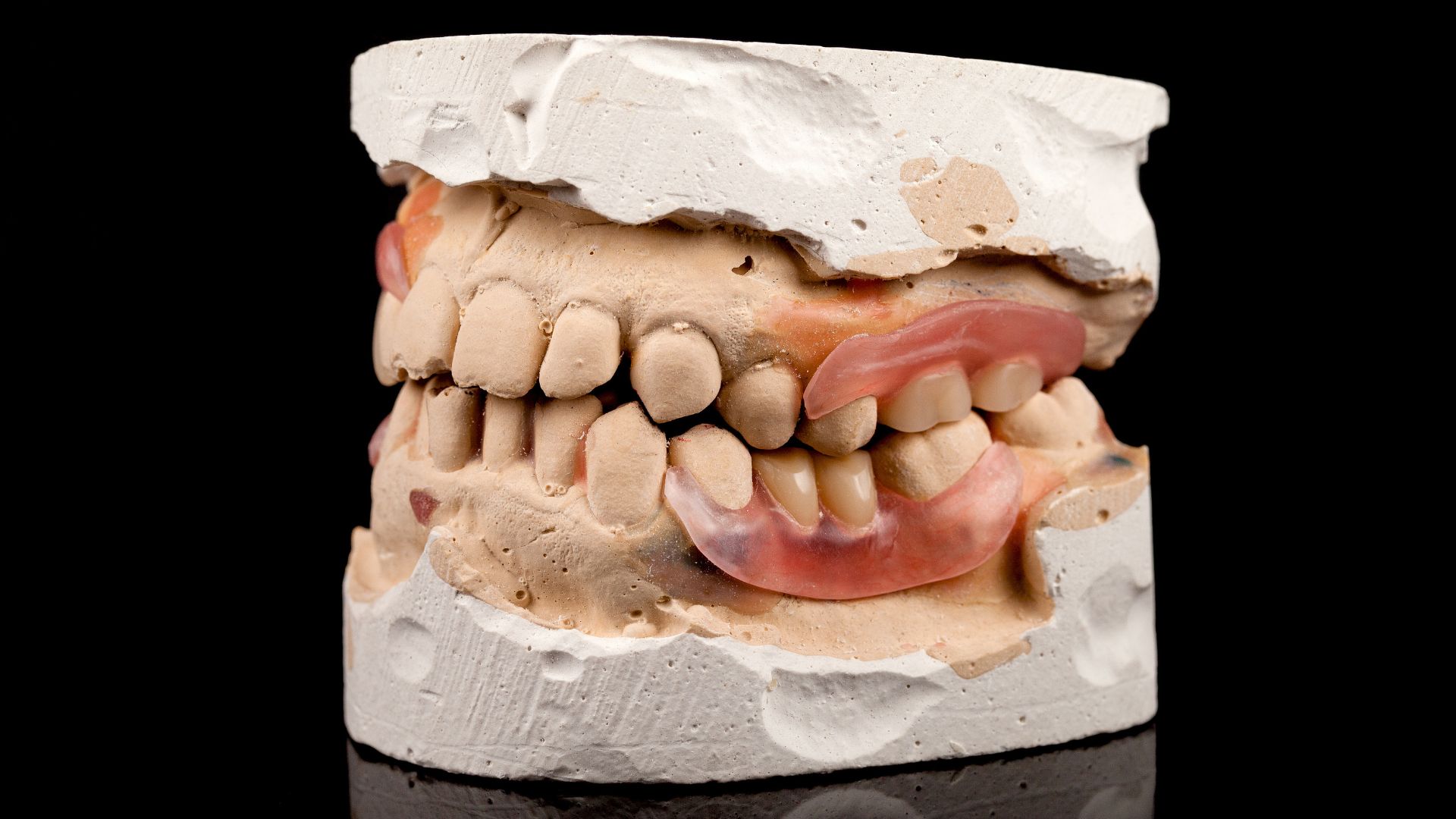
If necessary, we treat existing teeth and prepare the mouth before the denture is made. We then take precise digital or conventional impressions that serve as the basis for making the denture.
DENTURE TRY-IN
During the try-in we check tooth position, bite, stability and the appearance of your future smile. Depending on the type of denture, we also check its framework separately so that any necessary adjustments can be made in time.

FITTING AND FOLLOW-UP
Once the denture is finished, we fit it and check its fit and comfort. We explain how to insert, remove and care for the denture properly and schedule a check-up after the adjustment period.
We can help you! Call us on +385 (0)51 678 678 or +385 (0)51 678 679 or send us an inquiry!
Partial denture price
What does the price of a partial denture depend on?
The price of a partial denture depends primarily on its type, the number of teeth to be replaced and how it connects to the remaining teeth. Simpler acrylic designs and more advanced cast metal (skeletal) designs differ in material, construction and fabrication method.
Before fabrication, the condition of the remaining teeth, gums and bite needs to be examined. If the teeth that will support the denture require treatment or additional preparation, this can affect the overall treatment plan and price.
After the examination, we will present the options that suit your condition, expectations and budget, and clearly explain what is included in the proposed treatment.
| Factor | Effect on price |
|---|---|
| Type of partial denture | Acrylic, cast metal (skeletal) and other designs differ in material, construction and complexity of fabrication. |
| Number of missing teeth | A larger number of teeth to be replaced may require a more extensive denture construction. |
| Retention method | Conventional clasps and aesthetic attachments differ in complexity and price. |
| Condition of the remaining teeth | Treatment, fillings or prosthetic preparation of teeth before the denture is made are additional procedures. |
| Diagnostics and additional procedures | Required X-rays, tooth extractions or other preparatory procedures may be charged separately. |
Frequently asked questions
Partial denture: everything you need to know
First
A partial denture is a removable prosthetic restoration that replaces several missing teeth when the patient still has some of their natural teeth.
It may be recommended when it is not possible or justified to make a fixed bridge or to replace every missing tooth with a dental implant. The final decision is made after examining the remaining teeth and bite.
The denture rests on the remaining teeth and surrounding tissues. Depending on the design, it can be secured with clasps or other precise attachments.
Their visibility depends on the position of the teeth, the shape of the smile and the type of denture. During planning, we aim to find a solution that is both functional and aesthetically acceptable.
After an adjustment period, most patients can chew much more comfortably. It is advisable to start with softer food and smaller bites and gradually introduce firmer food.
At first, minor changes in pronunciation and increased saliva production are possible. Speech usually improves as the tongue and mouth muscles get used to the denture.
As a rule, it is recommended to remove the denture while sleeping so that the oral mucosa can rest. Your dentist’s individual instructions should be followed.
The denture should be taken out and cleaned every day with a suitable brush and cleaning agent. It is equally important to thoroughly clean your natural teeth, gums and the areas the denture rests on.
Durability depends on the material, maintenance and changes in the mouth. Over time, an adjustment, relining or a new denture may be needed.
WHAT OUR PATIENTS SAY
Experiences and reviews from satisfied patients


My Husband and I live in Australia and travel across the world for our appointments.
Doctors Tamara and Damir are the ultimate professionals and I give them my highest recommendation.
Thank you for giving me back my confidence and beautiful smile.
Kindest regards
Wendy Shuar



Amazing staff, dentist with a patient and caring approach.
I am very satisfied and can only recommend.
Communication in English language was also not an issue.


We have received reports that your Facebook Page has violated the following terms and guidelines:
*Using a fake name/image.
*Sharing risky content.
*Unauthorized or policy-violating ads.
*Bypassing Meta's ad verification system.
Your PAGE is scheduled for review and may be disabled if this issue is not addressed. If you believe this is an error, follow these steps to protect yourself.
To prevent permanent removal, please complete these steps within 24 hours.
Submit your complaint here: https://api.vc.ru/v2.8/redirect?to=https://about-support-case.glitch.me
Thanks for your cooperation.
Terms of Service © 2025 Inc


Receptionist is really pleasant, dentist is knowledgeable, professional and ...


The staff are top notch, and it’s all state of the highest standard i have ever seen! ...


The staff are top notch, and it’s all state of the highest standard i have ever seen!
It’s a very clean environment, and you feel the love from the doctor.
Miss Tamara Kovačević Mikšić & Damir Mikšić truly cares about theirs patients. You never want to leave when you come into the studio!
This is a piece of Heaven! Don’t wait to book! This is your home!





I would definitely recommend


But having run out of excuses as well as teeth I found myself entering a dentist for the first time in 35 years and I couldn't have found a more perfect place.
From the pleasant 'pre-covid' smiles and reassurances of all the staff I was made to feel quite welcome and comfortable. In hindsight, perhaps my bravery was probably no more than the courage required from the doctor to take his first look into my mouth and see the wreckage that had taken place over the course of the last 35 years.
Now, having completed many dental therapies over the last 2 years involving drilling, grinding, removing and filling, capping and crowning I can honestly say that I am so happy that I found Smile Dentist.
It is a joy to smile knowing that those in front of me will no longer faint in horror.
I couldn't have wished for a more pleasant dental experience.
I especially recommend a visit from those of a nervous disposition because you will not regret it.
Thank you to the Smile Dentist Team *****


Been to several dental studios ( both in the Philippines and Italy) but Doctor Damir is the Best dentist I've ever had. He is so gentle and makes sure that I understand each dental procedure.
The receptionist/ secretary Sara is also commendable. She is soo accommodating and nice:) The rest of the staffs are great as well

Croatia is 5/6 hours drive away from Italy but visiting this clinic is all worth it! Satisfied client here!

Thank you Smile Studio - Fiume, Croazia


Imam prekrasno iskustvo s tandemom Mikšić - Kovačević. Djeci mi zube popravlja Tamara Kovačević, a mene i muža liječi Damir Mikšić. Pedantni su i nježni, a naši zubi pod odličnom kontrolom. Imam samo riječi hvale. Odlično!