
Dental bridge
A stable, natural solution for missing teeth
 Smile Studio Dental Clinic
20+
years of experience
5.0
200+
6
top specialists
Dental bridge: a stable replacement for missing teeth
When is a dental bridge recommended?
A dental bridge can replace one or more adjacent missing teeth. The bridge closes the gap in the dental arch and restores chewing function, a more harmonious smile and support for the surrounding structures.
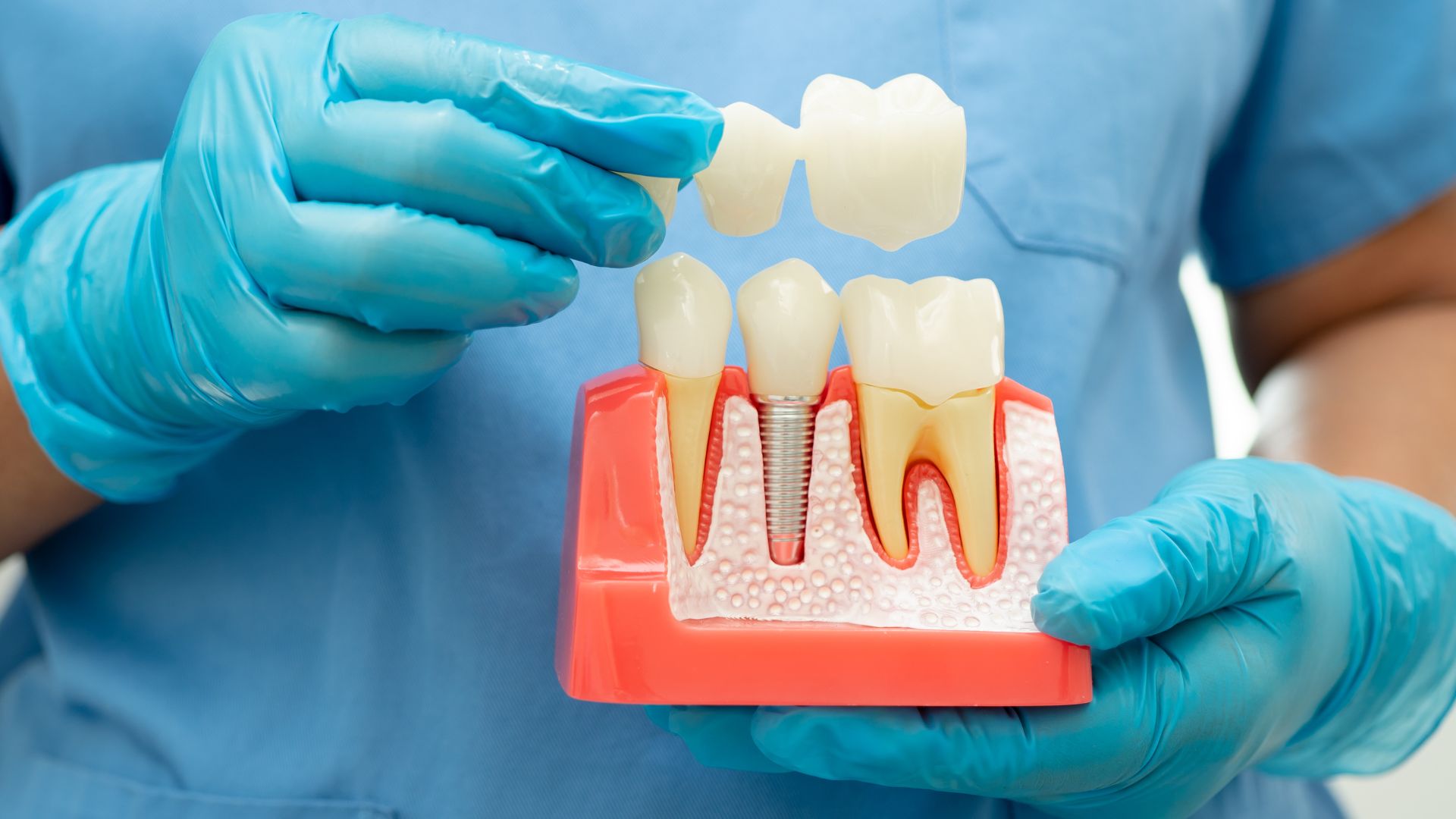
A conventional dental bridge rests on the adjacent teeth, which are first prepared so that they can carry the prosthetic restoration. When the right conditions are met, a bridge can also be placed on dental implants.
Replacing missing teeth reduces the risk of adjacent teeth shifting into the empty space, changes in the bite and overloading of the remaining teeth. Because it is fixed, the patient does not take it out of the mouth.
Before making the bridge, we assess the condition of the abutment teeth, gums, bone and bite. The appearance of the restoration is matched to your natural teeth so that its shape and shade blend harmoniously into your smile.
| Feature | Dental bridge |
|---|---|
| Who is it for? | People who are missing one or more adjacent teeth. |
| Type of restoration | A fixed prosthetic restoration that the patient does not take out of the mouth. |
| Method of attachment | It can rest on prepared natural teeth or on dental implants. |
| Number of teeth replaced | It can replace one tooth or several adjacent teeth, depending on the condition of the abutments and the bite. |
| Main advantages | It restores the continuity of the dental arch, chewing function, bite stability and a more harmonious smile. |
| Preparation of adjacent teeth | With a conventional bridge, the natural abutment teeth need to be prepared for the placement of crowns. |
| Maintenance | Along with regular brushing, the area under the bridge should be cleaned with interdental brushes or special dental floss. |
| Durability and warranty | Depends on the condition of the abutment teeth, oral hygiene, bite load and regular check-ups. Dental bridges come with a 5-year warranty. |
*Whether a bridge is suitable is assessed after examining the abutment teeth, gums, bone and bite relationship.
DENTAL BRIDGE: TREATMENT PROCESS
How can one or more missing teeth be replaced permanently?

Contact
Get in touch with us to arrange a consultation. During the first conversation you can describe your concerns, and we will give you basic information about the treatment options.

EXAMINATION AND TREATMENT PLAN
We examine your teeth, gums and bite in detail and assess the condition of the teeth that would carry the bridge. If needed, we take X-rays, present the treatment options and agree on a treatment plan.
TOOTH PREPARATION AND IMPRESSION
We carefully shape the abutment teeth so that they can securely carry the future bridge. After preparation we take a precise digital or conventional impression and together choose a shade that matches the surrounding teeth.
TEMPORARY BRIDGE
While the permanent bridge is being made, we protect the teeth with a temporary prosthetic solution. The temporary bridge preserves the appearance of your smile and basic function during the fabrication period.

TRY-IN AND PLACEMENT OF THE BRIDGE
Before final placement we check the shape, shade, margins and contact of the bridge with the opposing teeth. Once we are satisfied with the appearance and the bite, the bridge is cemented and you receive instructions for proper care.
We can help you! Call us on +385 (0)51 678 678 or +385 (0)51 678 679 or send us an inquiry!
Dental bridge price and warranty
What determines the total price of a dental bridge?
The price of a dental bridge is most often determined by the number of units in the bridge, the chosen material and the condition of the abutment teeth. A bridge that replaces several teeth requires more material and more complex fabrication than a smaller prosthetic restoration.
The choice of material depends on the position of the bridge, the load during chewing and the desired aesthetic result. In the more visible areas of the smile the emphasis is often on a natural appearance, while in the back of the mouth resistance to load is especially important.
The final price can be determined after an examination and assessment of the teeth that will carry the bridge. Before treatment begins, you will receive a material recommendation, a treatment plan and an overview of the expected costs.
Durability and warranty depend on the condition of the abutment teeth, oral hygiene, bite load and regular check-ups. Dental bridges and crowns come with a 5-year warranty.
| Factor | Effect on price |
|---|---|
| Number of bridge units | Each crown and each replaced tooth counts as one bridge unit, so a longer span increases the total price. |
| Bridge material | Metal-ceramic, zirconia and other aesthetic options differ in their properties and price. |
| Condition of the abutment teeth | If the abutment teeth require treatment, a core build-up or other preparatory procedures, the total cost may be higher. |
| Temporary bridge | The type of temporary prosthetic solution and how long it is worn can affect the cost of treatment. |
| Diagnostics and additional procedures | X-rays, dental treatment and other necessary procedures may be charged separately. |
Frequently asked questions
Dental bridge: everything you need to know
First
A dental bridge is a fixed prosthetic restoration that closes the gap left by the loss of one or more adjacent teeth.
A conventional bridge rests on the adjacent natural teeth, which serve as abutments. In certain cases a bridge can also be placed on dental implants.
With a conventional bridge, the abutment teeth need to be reshaped so that the crowns carrying the bridge can be placed on them. The amount of preparation depends on the condition of the teeth and the planned material.
A bridge replaces a missing tooth by resting on the adjacent teeth or on implants. An implant replaces the tooth root on its own, and a crown is placed on top of it. The most suitable solution depends on the condition of your teeth, bone and bite.
If needed, tooth preparation is performed under local anaesthesia. After the procedure, temporary sensitivity of the teeth or gums is possible.
Fabrication usually requires several visits. The duration depends on the number of teeth, the condition of the abutment teeth, the chosen material and any preparatory procedures.
In addition to regular brushing, you should use interdental brushes, an oral irrigator or special dental floss that can be threaded under the bridge.
Durability depends on the health of the abutment teeth, the condition of the gums, oral hygiene, bite load and regular check-ups.
You should book an examination as soon as possible. The dentist will check the bridge, the cement, the abutment teeth and the surrounding tissues and decide whether the bridge can be re-cemented or needs to be replaced.
WHAT OUR PATIENTS SAY
Experiences and reviews from satisfied patients


My Husband and I live in Australia and travel across the world for our appointments.
Doctors Tamara and Damir are the ultimate professionals and I give them my highest recommendation.
Thank you for giving me back my confidence and beautiful smile.
Kindest regards
Wendy Shuar



Amazing staff, dentist with a patient and caring approach.
I am very satisfied and can only recommend.
Communication in English language was also not an issue.


We have received reports that your Facebook Page has violated the following terms and guidelines:
*Using a fake name/image.
*Sharing risky content.
*Unauthorized or policy-violating ads.
*Bypassing Meta's ad verification system.
Your PAGE is scheduled for review and may be disabled if this issue is not addressed. If you believe this is an error, follow these steps to protect yourself.
To prevent permanent removal, please complete these steps within 24 hours.
Submit your complaint here: https://api.vc.ru/v2.8/redirect?to=https://about-support-case.glitch.me
Thanks for your cooperation.
Terms of Service © 2025 Inc


Receptionist is really pleasant, dentist is knowledgeable, professional and ...


The staff are top notch, and it’s all state of the highest standard i have ever seen! ...


The staff are top notch, and it’s all state of the highest standard i have ever seen!
It’s a very clean environment, and you feel the love from the doctor.
Miss Tamara Kovačević Mikšić & Damir Mikšić truly cares about theirs patients. You never want to leave when you come into the studio!
This is a piece of Heaven! Don’t wait to book! This is your home!





I would definitely recommend


But having run out of excuses as well as teeth I found myself entering a dentist for the first time in 35 years and I couldn't have found a more perfect place.
From the pleasant 'pre-covid' smiles and reassurances of all the staff I was made to feel quite welcome and comfortable. In hindsight, perhaps my bravery was probably no more than the courage required from the doctor to take his first look into my mouth and see the wreckage that had taken place over the course of the last 35 years.
Now, having completed many dental therapies over the last 2 years involving drilling, grinding, removing and filling, capping and crowning I can honestly say that I am so happy that I found Smile Dentist.
It is a joy to smile knowing that those in front of me will no longer faint in horror.
I couldn't have wished for a more pleasant dental experience.
I especially recommend a visit from those of a nervous disposition because you will not regret it.
Thank you to the Smile Dentist Team *****






Been to several dental studios ( both in the Philippines and Italy) but Doctor Damir is the Best dentist I've ever had. He is so gentle and makes sure that I understand each dental procedure.
The receptionist/ secretary Sara is also commendable. She is soo accommodating and nice:) The rest of the staffs are great as well

Croatia is 5/6 hours drive away from Italy but visiting this clinic is all worth it! Satisfied client here!

Thank you Smile Studio - Fiume, Croazia





Imam prekrasno iskustvo s tandemom Mikšić - Kovačević. Djeci mi zube popravlja Tamara Kovačević, a mene i muža liječi Damir Mikšić. Pedantni su i nježni, a naši zubi pod odličnom kontrolom. Imam samo riječi hvale. Odlično!