

Many people believe that because their tooth is covered by a dental crown, it is no longer susceptible to disease. However, this is not the case at all. Crowned teeth are just as susceptible as any other tooth. Many factors can cause toothache, sensitivity or bite complications. As a result, pain under a dental crown can also occur.
You can read more about dental crowns themselves in our article Dental crowns. Below are the four most common reasons why our patients experience pain under a dental crown, and the steps to take in that case.
Nerve inflammation
If root canal treatment was not performed on your tooth before the dental crown was placed, the tooth still has a nerve. The nerve can become inflamed after the tooth is prepared for a crown or bridge, because of decay left under an old filling, or because of new tooth decay.
Signs of inflammation can include pain when you bite, sensitivity to hot and cold, and spontaneous pain. If you have any of these symptoms, contact your dentist immediately. The solution to this problem is endodontic treatment, that is, root canal treatment of the tooth.
Tooth decay
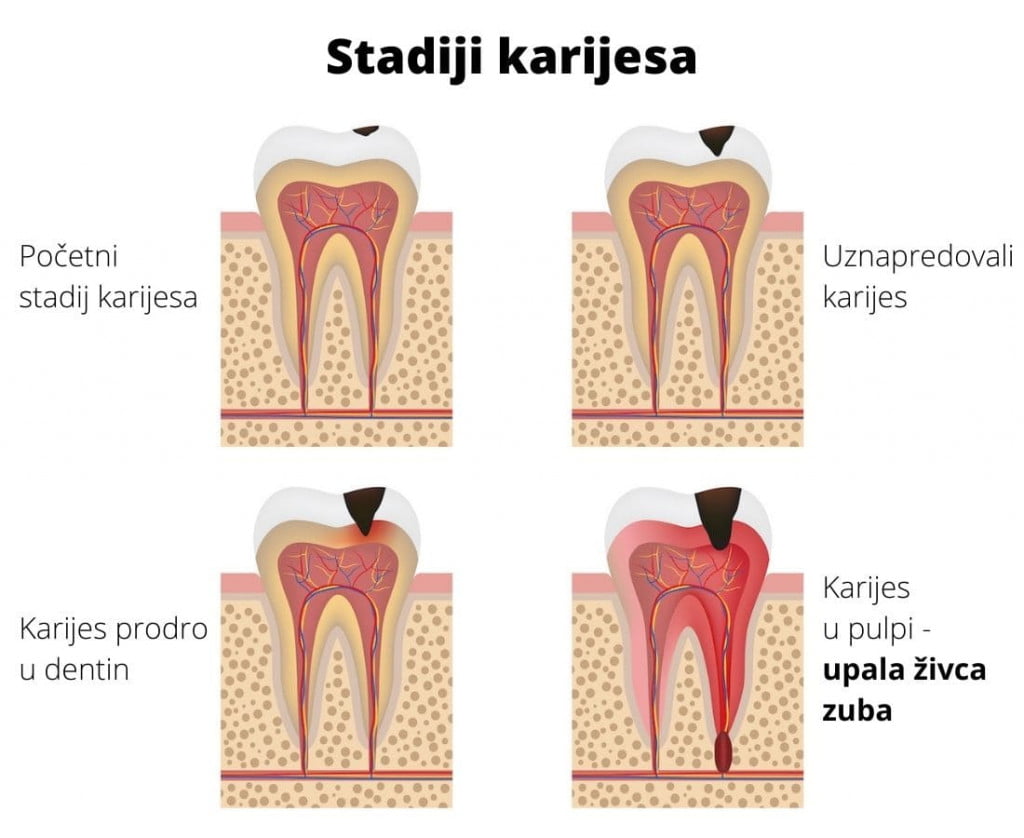
Watch the video showing how tooth decay forms and progresses to the development of a granuloma.
https://youtu.be/C7h41d5WG9k
Most people assume that once a dental crown has been placed, the risk of tooth decay on that tooth is over. However, since the tooth under the dental crown is still alive, new decay can form at the margin between the tooth and the crown. It forms as a result of plaque build-up. If the decay penetrates deep into the tooth, it can reach the nerve, causing the nerve to die and become infected. In that case, root canal treatment of the tooth will be needed.
The dentist will drill a small hole in the crown to access the inflamed nerve through it and clean it out together with the surrounding tissue in the root of the tooth. This may require several visits to the dentist before the problem is fully resolved. The best way to avoid tooth decay under a dental crown is proper oral hygiene together with regular dental check-ups and professional teeth cleaning. Contact our team if you suspect decay under a dental crown or if it is time for a thorough cleaning, that is, teeth air polishing.
A broken crown
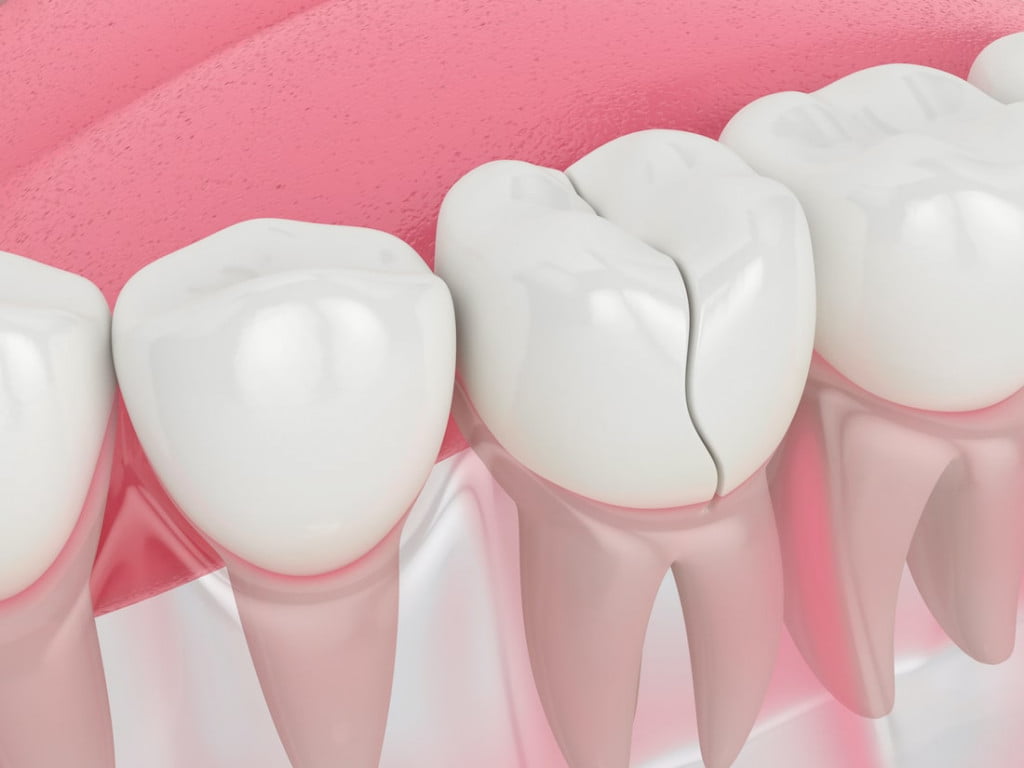
A cracked dental crown can be unpleasant and in some cases cause mild pain. The cause may be grinding your teeth at night, so-called bruxism. This puts pressure on the crown, which could result in it cracking. Another cause of breakage can be accidentally biting on a hard piece of food such as a fruit stone, a small piece of bone or something similar. Any sensitivity to heat, cold or air may be the result of the tooth under the crown being directly exposed through the crack.
If you notice that your dental crown is cracked, broken or has come off completely, contact your dentist to book an examination. Although a cracked crown is not an emergency, unless the pain is intense and interferes with your daily life, the crown will definitely need to be repaired within the next few days.
Receding gums
If the tooth under the crown starts to become sensitive to hot, cold and/or air, it could be because the gums around the tooth have receded over time, exposing part of the root. A poorly made crown, rough tooth brushing and also some physiological processes can lead to gum recession. Gum tissue that is starting to recede is more prone to plaque build-up and can lead to gum inflammation. Dentine is the hard, yellow tissue under the enamel. This yellow tissue is exposed when the gums recede. You can tell that recession has occurred if you see a yellow area next to the white crown. If this happens, your dentist will suggest a suitable solution.
How to avoid pain under a dental crown
You should feel comfortable after a dental crown is placed, and it should not cause you pain. Toothache should not be ignored. Inflammation, tooth decay, a broken crown and other problems can get worse without treatment and over time cause more serious problems and more intensive treatment. To help your dental crowns last, maintain proper oral hygiene.
Brush your teeth correctly, at least twice a day for two minutes, and use interdental brushes as recommended by your dentist. A tooth with a crown needs the same care as your other teeth. And if you feel pain, contact your dentist to examine you and assess what is wrong.
Dental crowns at Smile Studio
If you think you need a dental crown or need to replace an existing one, the procedure is simple. Before the crown is placed, the tooth needs to be ground down. The dentist then takes an impression of the tooth so that a custom-made crown can be produced. Our crowns are made using CAD/CAM technology for the highest precision and quality.
Once your crown is ready, it is cemented onto the tooth and can last 10 years or longer with proper care and oral hygiene. At Smile Studio, we have been caring for the health and beauty of our patients’ smiles for many years. Book your first examination and become part of our Smile family.