
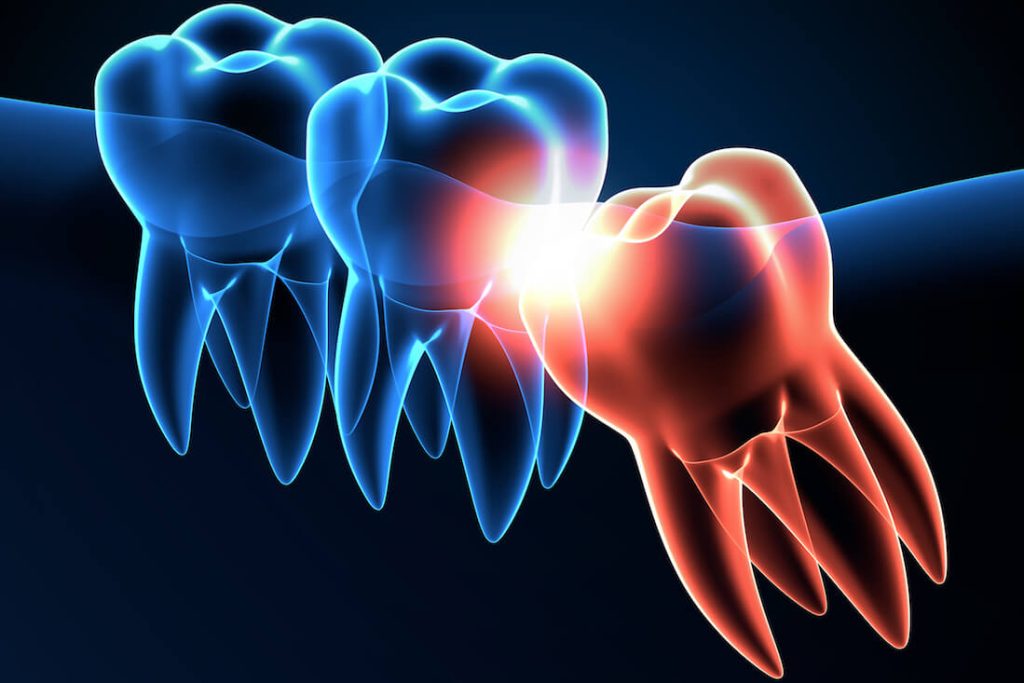
Impacted wisdom teeth occur when your third molars become partially or completely trapped in the gums or jawbone. This can lead to a number of oral health problems, including infections, tooth decay and gum disease. Surgical removal is often recommended as the treatment for impacted wisdom teeth.
What are impacted wisdom teeth?
Impacted wisdom teeth are third molars at the back of the mouth that do not have enough room to emerge or develop normally. These molars usually erupt (break through the gums) between the ages of 17 and 25. Wisdom teeth are the last permanent teeth to come through. Most people have four wisdom teeth at the back of the jaw – two at the top and two at the bottom.
Impacted wisdom teeth can cause pain, damage to other teeth and other dental problems. In some cases, impacted wisdom teeth cause no visible or immediate problems. But because they are hard to clean, they may be more prone to tooth decay and gum disease. If they cause pain or other dental complications, they are usually removed, and some dentists and oral surgeons also recommend removing impacted wisdom teeth that cause no symptoms in order to prevent future problems.
Symptoms
Impacted wisdom teeth do not always cause symptoms, however, they do when they become infected, damage other teeth or cause other dental problems. You may experience some of these signs or symptoms:
- Red or swollen gums
- Tender or bleeding gums
- Jaw pain
- Swelling around the jaw
- Bad breath
- An unpleasant taste in the mouth
- Difficulty opening the mouth
What causes wisdom teeth to become impacted?
Wisdom teeth usually become impacted when your jaw does not have enough room to accommodate all of your teeth. Sometimes a tooth can erupt at the wrong angle, which can lead to impaction. In most people, wisdom teeth come through without any problems and line up with the other teeth behind the second molars. In many cases, however, jaw problems prevent the third molars from developing normally. Because of the wrong position or lack of space, these third molars become “trapped” (impacted).
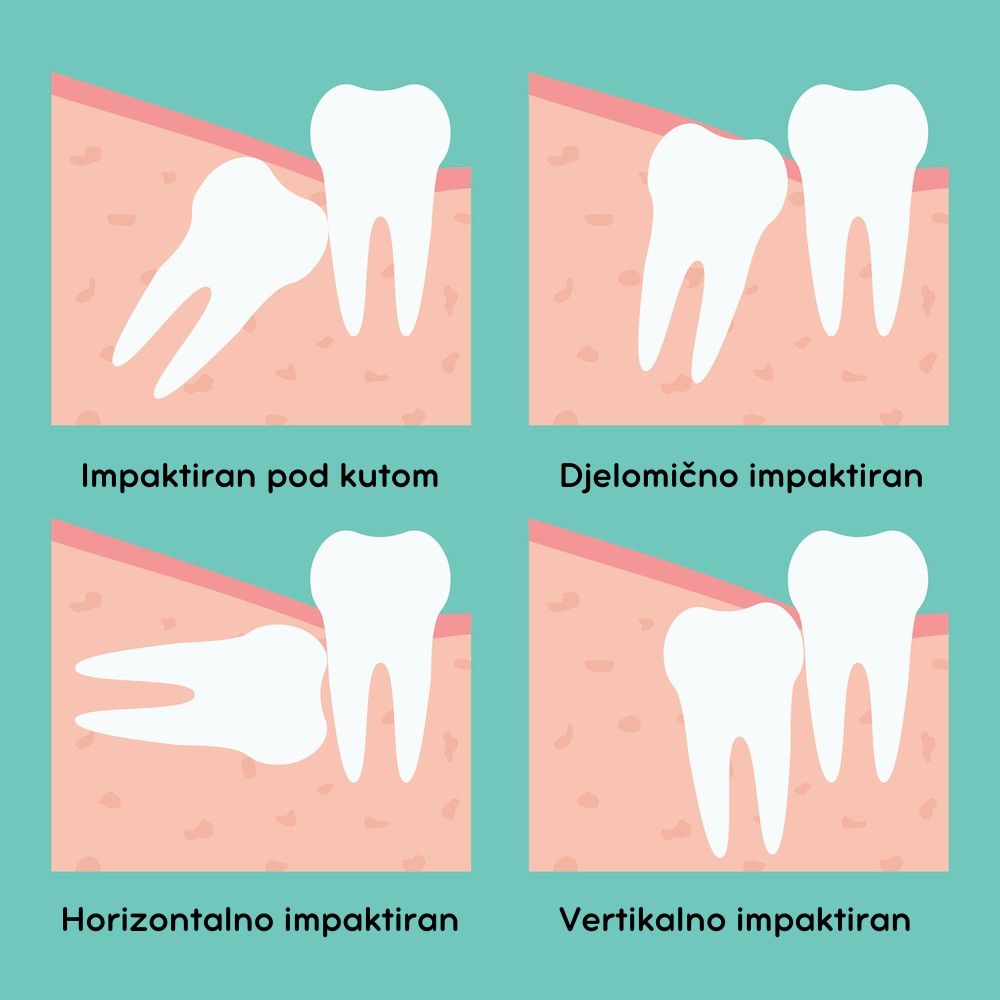
An impacted wisdom tooth may partially emerge so that part of the crown is visible (partially impacted), or it may never break through the gums (fully impacted). Whether partially or fully impacted, a wisdom tooth may:
- Grow at an angle towards the next tooth (the second molar)
- Grow at an angle towards the back of the mouth
- Grow at a right angle to the other teeth, as if the wisdom tooth were “lying down” within the jawbone
- Grow straight up or down like other teeth, but stay trapped within the jawbone
Complications
Impacted wisdom teeth can cause several problems in the mouth:
- Damage to other teeth: If a wisdom tooth pushes against the second molar, it can damage the second molar or increase the risk of infection in that area. This pressure can also cause crowding problems with the other teeth in the jaw. In that case, orthodontic treatment may be needed to correct the problem and straighten the teeth.
- Cysts: A wisdom tooth develops in a sac within the jawbone. The sac can fill with fluid, forming a cyst that can damage the jawbone, teeth and nerves. In rare cases a tumour can develop, usually a benign one. This complication may require removal of tissue and part of the bone.
- Tooth decay: Partially impacted wisdom teeth appear to be at a higher risk of tooth decay than other teeth. This probably happens because wisdom teeth are harder to clean and because food and bacteria easily get trapped between the gum and a partially erupted tooth.
- Gum disease: Difficulty cleaning partially erupted wisdom teeth increases the risk of developing a painful, inflammatory gum condition.
How are impacted wisdom teeth treated?
If your impacted wisdom teeth are causing pain, infection or other damage to the teeth, removal, that is, extraction of the tooth, is usually recommended. Many dentists recommend this oral surgery procedure as a preventive measure to reduce the risk of problems in the future.
Are impacted teeth more painful to remove?
Although impacted wisdom teeth are generally harder to remove, the process is not necessarily more painful. Your dentist or oral surgeon will give you pain medication to relieve any postoperative (after surgery) discomfort.
Prevention
You cannot prevent impaction from occurring, but regular six-monthly visits to the dentist for teeth cleaning and check-ups allow your dentist to monitor the growth and eruption of your wisdom teeth. Regularly updated dental X-rays can reveal impacted wisdom teeth before symptoms develop.