
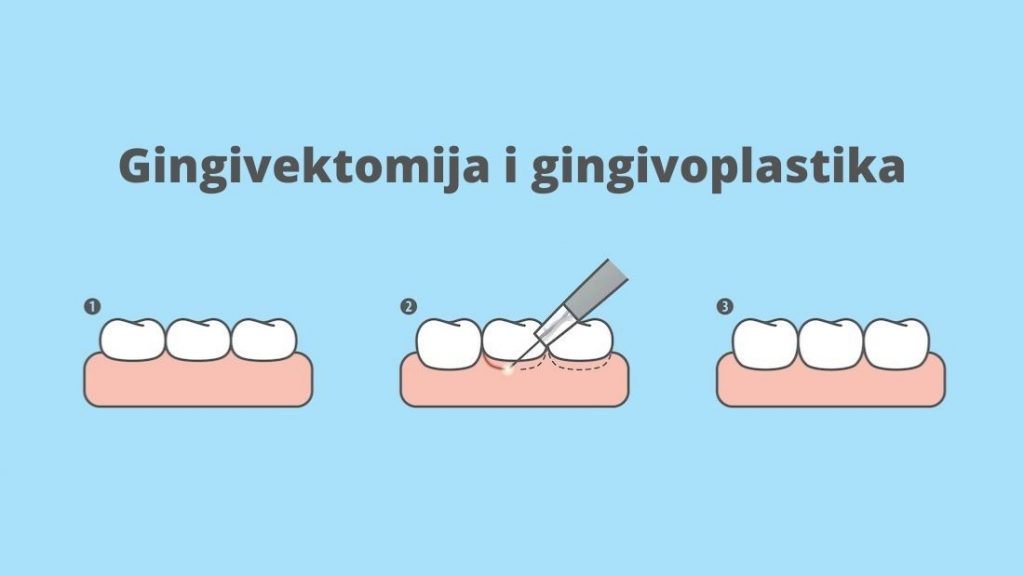
Gingivectomy and gingivoplasty are different dental surgical procedures used to treat gum problems.
The main difference between the two is that gingivectomy removes diseased gum tissue surrounding a gum pocket (periodontal pocket), while gingivoplasty is performed to reshape the gum tissue, usually for cosmetic (aesthetic) reasons.
When is a gingivectomy performed?
As mentioned, one of the most common reasons for a gingivectomy is as a response to periodontal disease. We define periodontal disease as an advanced form of gingivitis, or gum disease, in which the inflammation affects the gums and the bone.
A gingivectomy is performed to remove the patient’s diseased gum tissue, which helps stop the disease from progressing, allows the gums to heal properly and also creates better conditions for cleaning.
When is a gingivoplasty performed?
The main use of gingivoplasty is cosmetic reshaping of the gum line. Many people have asymmetrically shaped or oversized gums, which is not a major health concern but can make the teeth look smaller or misshapen. This procedure restores symmetry and a more attractive gum line.
Gingivoplasty is also often used when the length of the front teeth needs to be increased for cosmetic reasons. This procedure can be combined with reshaping the bone around the teeth (so-called osteoplasty).

What to expect during gingivectomy or gingivoplasty treatment?
If you are preparing for a gingivectomy or gingivoplasty, you can expect the following steps:
- Your dentist will carry out an initial cleaning and plaque removal. If there is tartar below the gum line, it will be removed with a procedure called dental curettage.
- To reduce pain and swelling during the procedure, your dentist will apply a local anaesthetic to the area being operated on. This will numb your gums during the operation.
- Before starting the gingivectomy, your dentist will use a probe to measure the depth of the gum pockets.
- During the surgical procedure itself, the diseased gum tissue will be removed. This step is the key to making sure your gums can return to their normal function.
- After the procedure, your dentist will place the necessary surgical dressing over the area, which will help the healing process and prevent any chance of bleeding.
If you are thinking about dealing with gum problems, it is best to consult your dentist about the best treatment options. In any case, we are always here for you, so feel free to contact us today.