
When is an apicoectomy recommended?
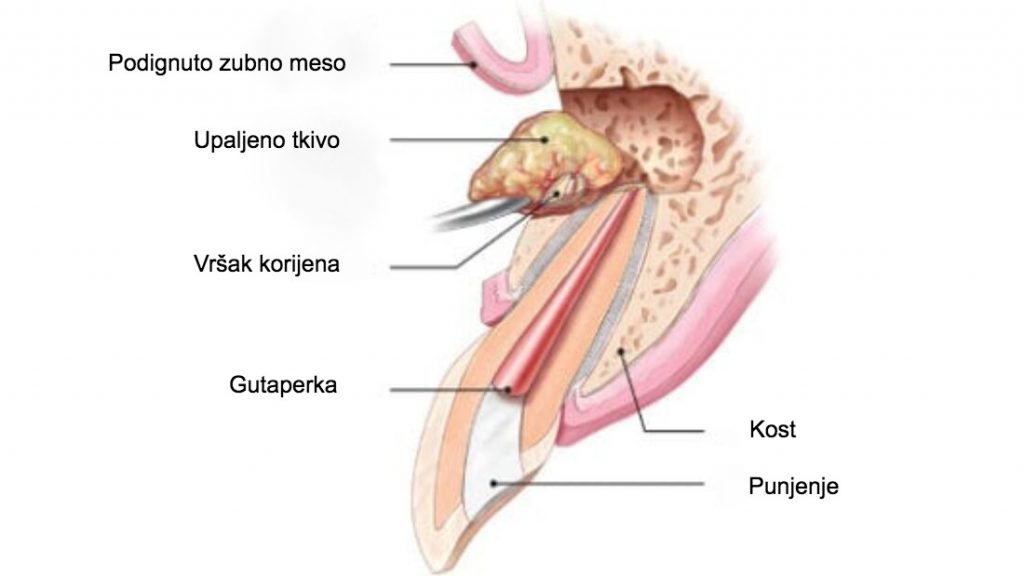
An apicoectomy (root-end resection) is a minor oral surgery procedure that removes the tip of the root of a diseased tooth together with the surrounding inflamed tissue. The aim is to remove a chronic infection (a granuloma or cyst) at the root tip and so save a tooth that might otherwise have to be extracted. Once the root tip and the inflamed tissue have been removed, the root canal is cleaned and sealed with a filling if needed (either during the procedure or beforehand through repeat root canal treatment). In the end, an apicoectomy is an attempt to keep the natural tooth: by mechanically removing the source of inflammation, it gives the tooth a “second chance” after standard root canal treatment (endodontic therapy) has not healed it.
An apicoectomy is not done routinely, but only after the tooth has already had root canal treatment at least once. There are specific situations in which the dentist recommends an apicoectomy as the best option:
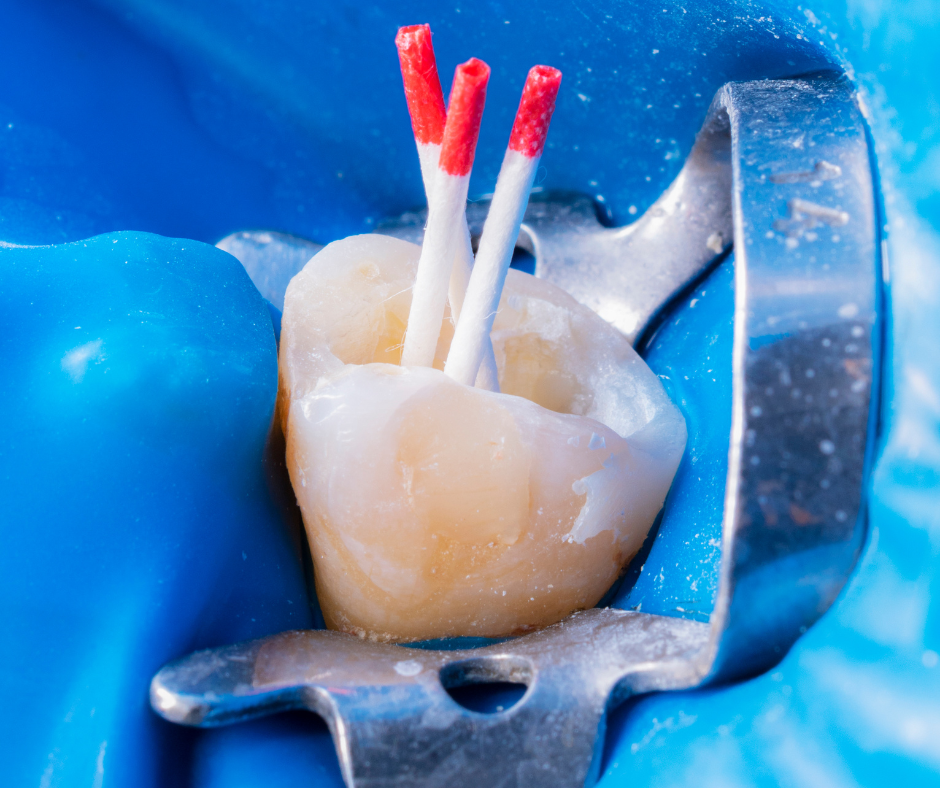
- Reinfection after root canal treatment: If inflammation develops again around the root tip after the initial treatment (or even after one retreatment), the problem often lies in the area of the root tip itself. In such cases, especially if repeating the conventional root canal treatment has already been tried or is not possible, an apicoectomy can remove the inflamed tissue directly from the bone. Thanks to modern technology, dentists will first consider root canal retreatment, for example checking whether there is an extra, undetected canal that caused the persistent infection, because successful retreatment can cure the infection without surgery. An apicoectomy is considered only when the tooth has already had root canal treatment and retreatment is not possible or has not worked.
- Anatomical or prosthetic obstacles to retreatment: Sometimes repeat root canal treatment is not practical, for example when the tooth has a permanent crown or supports a bridge. Removing that crown or bridge to retreat the canals could destroy or weaken it, so in that situation an apicoectomy remains the only option for treating the inflammation and keeping the tooth. The root canals can also be very curved, narrow or inaccessible (e.g. fragments of instruments left in the canal). In such anatomical cases the root tip is easier to reach surgically through the bone than by drilling through the tooth again.
- A persistent cyst or granuloma at the root tip: With chronic periapical inflammation (granulomas) or cysts that do not heal despite root canal treatment, an apicoectomy allows this diseased tissue to be removed directly from the bone together with the tip of the root. This physically removes the focus of infection, which encourages the bone to heal. Put simply, the procedure “clears the ground” around the root tip when that could not be achieved with medication and instruments through the canal.
It is important to stress that an apicoectomy is not always feasible or effective on every tooth. For example, on teeth with several roots (especially back molars) the procedure is technically more complex and sometimes not possible for all roots; in the lower jaw, back teeth are harder to treat successfully this way. Also, if the root itself is cracked or badly damaged, an apicoectomy cannot save the tooth. In that case it is better to plan an extraction and replace the tooth with an implant or a bridge.
How the procedure works
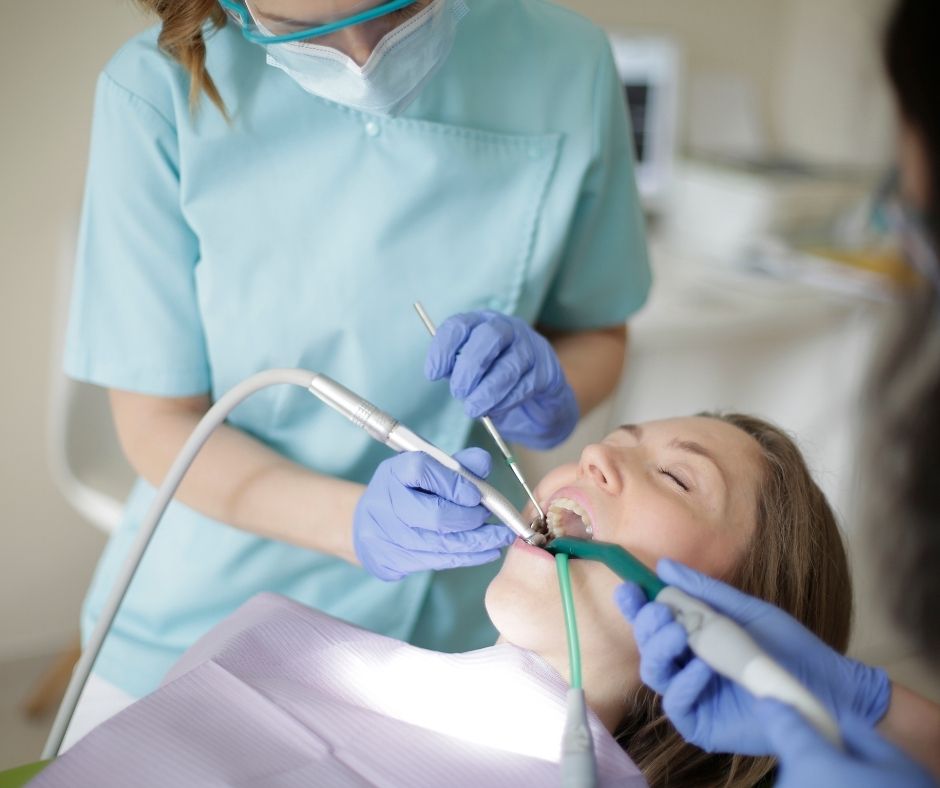
The procedure is carried out by an oral surgeon or an endodontist with additional surgical training, under local anaesthesia just like a tooth extraction, which makes it completely painless. Once the anaesthetic takes effect, the gum (gingiva) is cut and lifted as a small flap to expose the jawbone above the root tip. A small window often has to be opened in the bone with a dental drill right above the root tip to reach the infection. Then special instruments are used to remove the inflamed tissue together with a few millimetres of the root tip. This removes the source of infection. The next step is sealing (filling) the end of the canal: the surgeon cleans and fills the end of the root canal with a material that stops bacteria from getting back in. If cracks or fractures of the root are found during the procedure that could not be seen before and seriously threaten the tooth, it may be necessary to stop the procedure and extract the tooth instead of continuing with the apicoectomy. Fortunately this is not common, but the patient should be aware of the possibility.
Once the root tip has been removed and the area cleaned, the gum flap is put back in place and closed with stitches. The stitches can be conventional (removed after 7 days) or dissolvable; your dentist will tell you in advance. The whole procedure usually takes about 30 to 60 minutes, depending on the tooth and its position. Front teeth with a single root are usually the quickest, while more complex back teeth can take longer (sometimes up to an hour and a half). For the patient the procedure is generally as comfortable as other dental operations: apart from noises, vibrations and a feeling of pressure, no pain is felt during the procedure thanks to effective anaesthesia.
| Stage of the procedure | Duration | What the patient can expect |
|---|---|---|
| 1. Preparation and anaesthesia | 5–10 minutes | Local anaesthesia makes the procedure painless |
| 2. Incision and access to the root | 5–10 minutes | A small incision in the gum to reach the root tip |
| 3. Removing the root tip and inflamed tissue | 10–20 minutes | The surgeon removes the root tip and the granuloma/cyst |
| 4. Filling and closing | 5–10 minutes | The canal is sealed with a filling and the wound is stitched |
| 5. Final instructions | 5 minutes | The patient receives instructions on medication, diet and care |
How long is recovery after the procedure?

Recovery after an apicoectomy is relatively quick. Most patients find they are back to normal activities within a few days. As a rule, initial recovery takes 3 to 5 days. During this time mild swelling may appear in the treated area; it is usually most noticeable on the second day and then gradually goes down. To reduce swelling, cooling with ice is recommended for the first 24 hours (alternating 20 minutes of ice and 20 minutes of rest). Your surgeon will give you exact instructions: we usually advise resting for the first day or two, sleeping with your head slightly raised and avoiding physical effort until the swelling and discomfort ease.
Pain after the procedure is usually mild to moderate for the first couple of days and is well controlled with painkillers available without prescription (such as ibuprofen) or prescribed by your dentist. Because the area has been operated on, it is important to keep up good oral hygiene with some adjustments: brush gently away from the incision, avoid rinsing your mouth for the first 24 hours, and then rinse gently with an antiseptic mouthwash (e.g. chlorhexidine) to reduce the number of bacteria. Do not touch or probe the wound with your tongue or fingers, and try not to smoke for at least a few days, as smoking slows healing and increases the risk of complications. You should also avoid hard or sticky food until the wound heals, so that the stitches do not break.
Depending on the type, the stitches are removed around day 7 or dissolve on their own within 2 weeks. Any pain and swelling usually go away within 7 to 14 days, and the gum heals normally. Interestingly, many patients say that recovery from an apicoectomy is easier than after the original root canal treatment, because after root canal treatment a longer-lasting throbbing pain can remain, while after an apicoectomy the pain settles faster. Experiences can of course vary, but if you follow your dentist’s instructions carefully, the chances of a quick and uncomplicated recovery are high.
| Factor / Complication | Frequency | Effect | Prevention / Solution |
|---|---|---|---|
| Overall success of the procedure | 70–90% | Successfully removes the infection and saves the tooth | Correct diagnosis and surgical technique |
| Pain and discomfort after the procedure | Very common | Temporary, relieved with painkillers | Taking the prescribed medication |
| Swelling and redness | Common (1–3 days after the procedure) | A normal tissue reaction | Cold compresses, rest, treatment as instructed |
| Bleeding | Moderate, short-lived | Usually stops within a few hours | Pressure with sterile gauze, contact the doctor if needed |
| Reinfection | Rare | Can lead to tooth loss | Regular check-ups, hygiene, antibiotics if needed |
| Damage to surrounding structures | Very rare (<1%) | Temporary numbness or sensitivity | An experienced surgeon, precise diagnostics |
How successful is an apicoectomy?
Today an apicoectomy is a very successful procedure for saving problem teeth. According to various studies, the success rate (meaning the inflammation clears and the tooth stays functional) ranges from about 50% up to 90%, depending on the specific case, the size of the lesion, the technique and materials, the surgeon’s experience, the presence of micro-cracks in the tooth and so on. Such a wide range sounds confusing, but modern approaches (so-called endodontic microsurgery using an operating microscope and special retrograde fillings) have raised the healing rate of apicoectomy to over 90% over a follow-up of a few years. In other words, on average 9 out of 10 teeth continue to function healthily after this procedure. Over time the success rate can be somewhat lower (looking at long periods of 5 to 10 years), because some teeth do develop new complications later, but many teeth saved by an apicoectomy last a lifetime.
The biggest risk of an apicoectomy is that despite the procedure the inflammation does not heal completely, or comes back later, which means the tooth will have to be extracted after all. This outcome is not common but it is possible, especially when there are factors such as a cracked root, a poorly done canal filling or an extensive bacterial infection beyond the reach of cleaning. Before the procedure your dentist will assess the chances of success and explain all the risks. In general, if the apicoectomy succeeds and the tooth is stable for the first two years after the procedure, it is very likely to stay that way for many years (it is considered a permanent solution for that tooth).
Apicoectomy or root canal retreatment?
When faced with a persistent tooth infection after root canal treatment, the choice is often between repeat root canal treatment and an apicoectomy. Root canal retreatment means opening the tooth, removing the old filling from the canal, cleaning and disinfecting the canal again and filling it anew. It is a non-invasive approach (no surgery on the bone) and the first choice in ideal circumstances. If the canals are accessible and the dentist judges that the problem can be solved from inside (for example an unfilled canal is visible on the X-ray, or the old filling is suspected of leaking), retreatment deals with the source of infection inside the tooth and extends the life of the tooth by many years. The advantage of retreatment is that a surgical incision is avoided and there is no post-operative recovery such as swelling or stitches: the procedure is similar to ordinary root canal treatment, only somewhat longer. The success rate of well-performed retreatment is also relatively high (around 75–85%), especially when it is done by a specialist endodontist.
An apicoectomy comes into play when conventional retreatment is not an option or has not worked. As described above, it is a surgical approach through the bone to the root tip. When will the dentist suggest an apicoectomy instead of retreatment? As a rule, if the infection is localised around the root tip itself and the canal is already well filled or inaccessible, it is better to approach from outside. Also, if the tooth already has good-quality prosthetic work (an expensive crown or it supports a bridge), an apicoectomy preserves that work, while repeat canal treatment would require drilling through the crown or removing it. In short, retreatment is less invasive and preserves the tooth structure, so it is tried first; an apicoectomy is “plan B” when retreatment is not feasible or does not solve the problem. The two approaches can often be combined: for example, the dentist first cleans the canal mechanically as far as possible (retreatment) and then, in the same session, performs an apicoectomy to remove the inflammation around the tip. Every case is different, so your dentist will explain what is best for your particular tooth.
Apicoectomy or extraction and a dental implant?
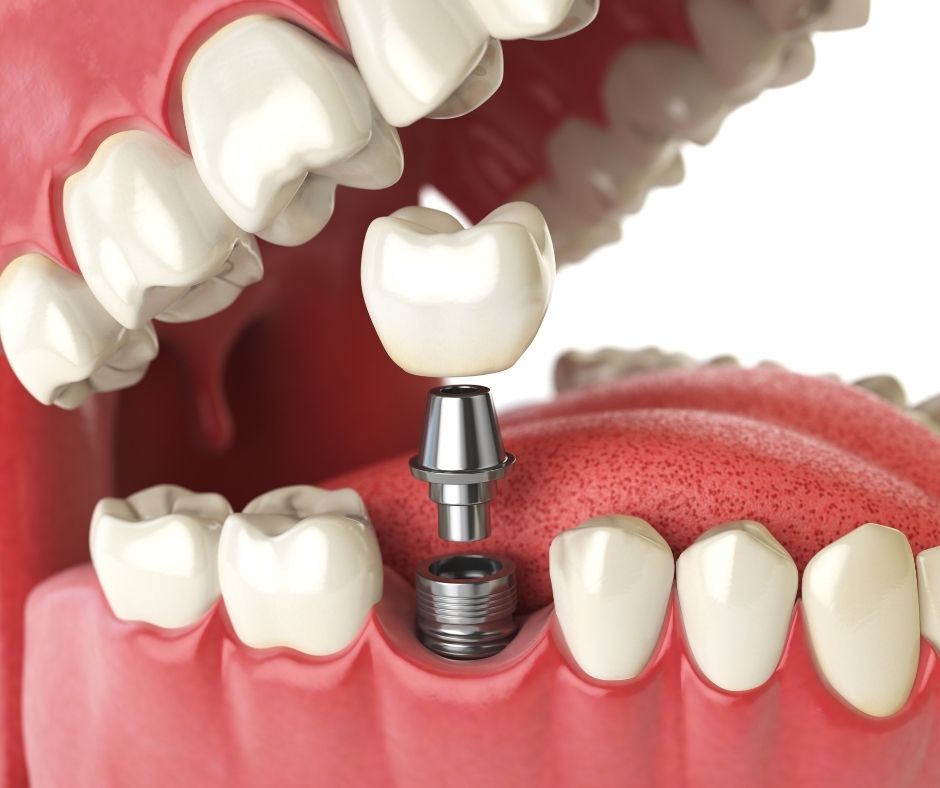
When root canal treatment (first or repeat) fails, or when we judge that the tooth is structurally beyond saving (cracked, too badly destroyed by decay, or the infection too extensive), a third option arises: extracting the diseased tooth and replacing it, most often with a dental implant. Extracting the tooth will certainly clear the infection, because the whole tooth (the source of the problem) is removed from the mouth. After that, a titanium implant can be placed in the bone where the tooth was lost, creating a new artificial “root” replacement that carries a crown. Implants are a very successful solution today: the success rate of implant placement is over 95-98%, which makes them a predictable treatment. In addition, an implant cannot get tooth decay, it is immune to future pulp infections (because there is no pulp) and it can last for decades. Many people will ask: why bother saving a problem tooth with retreatment or an apicoectomy at all, if an implant sounds so good?
It is important to understand that keeping the natural tooth, whenever this is reasonably possible, remains the first and best choice. Even the best implant is not “better than a tooth” biologically: a tooth has a periodontal ligament that gives a natural feel when biting, keeps the bone vital, and carries no risk of surgical rejection. With an apicoectomy or retreatment we can avoid an extraction and keep your own tooth, which is always worth trying if the chances of success are good. On the other hand, an implant is a considerably more expensive and longer procedure: it involves extracting the tooth, letting the bone heal (sometimes a sinus lift or bone augmentation is needed), then placing the implant and waiting for it to integrate with the bone, and finally making the prosthetic restoration. This can take months. Implants also carry a risk of complications (e.g. peri-implantitis, inflammation around the implant) even though they do not get diseased the way natural teeth do. That is why dentists usually recommend an implant only once the options for saving the tooth have been exhausted, or when they judge that repairing the tooth has no long-term prospects. For example, if the root is cracked down to the bone level or the tooth has had several major treatment failures, it is better to extract it and invest in an implant that will be more stable in the long term. In some situations the patient may prefer an implant to avoid repeated procedures on the same tooth, but this decision should be weighed carefully together with the dentist, taking into account health, finances and personal priorities.
A brief comparison of the advantages and disadvantages of each option:
- Root canal retreatment: The advantage is minimal invasiveness: it preserves the tooth structure and existing fillings/crowns, with a solid success rate. The disadvantage is that it is not always possible (blocked canals, complications) and that the tooth is opened again (with a possible risk of weakening the tooth or of the infection spreading into the surrounding bone if it fails).
- Apicoectomy: The main advantage is keeping the tooth even when conventional methods fail: the procedure removes the inflammation directly from the bone, often resolving the symptoms quickly. It allows prosthetic work (crowns/bridges) on the tooth to be kept, because the procedure is done from the outside. Recovery is relatively quick (a few days) and the procedure has a high success rate in the hands of an experienced specialist. The disadvantage is that it is still a surgical procedure: there are stitches, mild pain and swelling, and (rarely) a risk of complications such as sinus infection or nerve injury, depending on the position of the tooth. An apicoectomy also will not help if the tooth has an undetected crack or if the infection is diffuse (the inflammation will then come back). Ultimately, it is not a 100% guarantee: some teeth still have to be extracted in the end, which means the effort was in vain, but the percentage of such cases is relatively low.
- Extraction and an implant: The advantage is that it definitively removes the problem tooth and the infection, and the implant provides a very reliable replacement (high success rate, long lifespan). Once successfully placed, an implant works almost like a natural tooth and does not get tooth decay. The disadvantages are that the natural tooth is lost (which is always the “gold standard” if it could have been saved), the procedure is expensive and lengthy, and it carries surgical risks (like any operation). The surrounding bone also shrinks (resorbs) after an extraction until the tooth is replaced with an implant, and an implant requires very good oral hygiene and regular check-ups to stay healthy in the long term.
Conclusion for patients
An apicoectomy is a valuable option for persistent tooth infections that do not respond to conventional root canal treatment. This procedure has saved many teeth that went on to serve patients for years, which is the aim of modern dentistry: to extend the “lifespan” of your natural teeth as much as possible. There are of course situations when even an apicoectomy is not enough or not feasible, and then extracting the tooth and placing an implant is the best solution for your oral health. Every case is individual: your dentist will recommend the treatment that offers the best chance of long-term success, whether that is root canal retreatment, an apicoectomy or an implant. The most important thing is to be well informed. We hope this article has helped you understand what an apicoectomy is, how it is done, and its advantages and limitations compared with other options. If you have any further questions or doubts, feel free to ask us, because together we will reach the best decision for your smile.